
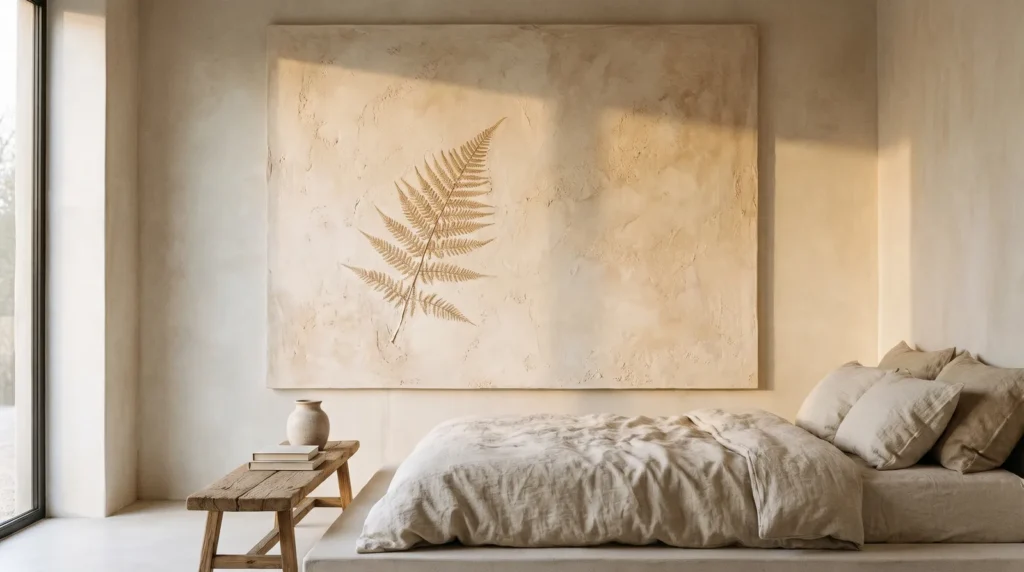
Wabi sabi is the Japanese idea of finding beauty in things that are imperfect, impermanent and incomplete. For a wabi sabi wall decor DIY project, that means rough plaster, uneven edges, earthy color and natural materials that are allowed to show their age.
You can make beautiful wabi sabi wall decor this weekend, and you don’t need any art training to do it. A cracked edge or an uneven stroke isn’t a mistake; it’s the whole point.
These 21 ideas range from simple plaster textures to pressed botanicals, raw wood frames and soft lighting, and most can be made with inexpensive materials.
The Short Version
- Use joint compound, not craft paint. Hardware store joint compound gives the most natural, stone-like texture.
- Let some cracks happen. A few organic cracks add character and make the piece look aged.
- Frame with raw, untreated wood. Shiny metal frames work against the natural look.
- Light it warmly. A 2700K bulb from the side casts soft shadows across the texture.
Materials to Gather
The materials you choose shape how the finished piece feels, so look for supplies that echo nature.
1. Use joint compound instead of spackle
Lightweight spackle is often recommended, but it shrinks quickly and feels a bit like styrofoam once dry. USG All-Purpose Joint Compound is a better choice: it holds heavy peaks, dries hard and takes paint beautifully.
2. Buy raw unprimed linen
Standard white canvases are coated in gesso, which repels moisture. Raw, unprimed linen does the opposite: it absorbs some water from the plaster, which creates a stronger bond. It also leaves lovely fibrous edges on show if you don’t cover the whole canvas.
3. Mix in coffee grounds
Pure white plaster can look a little flat, so add some natural speckling. Mixing dried, used coffee grounds into your wet joint compound gives a subtle, gritty texture that looks like natural limestone.
4. Use a metal blade instead of plastic
Plastic putty knives bend too much and leave soft, muddy lines. A stainless steel Venetian plaster blade is stiff enough to scrape the plaster thin in some places and build crisp ridges in others.
5. Look for weathered wood
Instead of buying perfect dowels from the craft store, look for fallen branches or driftwood that has weathered to a soft silver gray. Old, worn wood adds a sense of history to the piece.
Plaster Techniques for a Natural Finish
This is the fun part. Try to let go of perfection and let your hands move naturally; a little unevenness is exactly what makes diy textured plaster wall art feel handmade.
6. Pull and drag the blade
Load your steel blade with compound, press it firmly against the canvas, pull it down quickly and then drag it sideways. The marks look a lot like the natural layers in a cliff face.
7. Mist the canvas first
A dry canvas pulls moisture out of plaster too quickly, which can make it flake. Keep a spray bottle nearby and lightly mist the raw canvas with water before your first layer of compound.
8. Let a few cracks happen on purpose
Cracks can add real character to diy textured plaster wall art. For a deliberately crackled look, spread a thick area of plaster and warm it straight away with a heat gun. The top dries and shrinks while the bottom stays wet, so the surface splits into natural-looking fissures. Keep this to the areas you want cracked, and seal the piece well afterwards.
9. Pounce with a sea sponge
Very crisp ridges can sometimes look harsh. Dab a damp natural sea sponge gently along them while the plaster is still wet to soften the edges and leave a slightly porous, coral-like finish.
10. Apply a limewash glaze
Flat paint can hide good texture, so try a limewash glaze once the plaster is completely dry. Romabio Classico works well. Thin it with plenty of water, brush it on and wipe it back straight away with a cotton rag, so the color settles into the grooves.

11. Seal with matte polycrylic
Plaster gives off fine dust, so it’s worth sealing. Avoid gloss, which catches the light in the wrong places. Two light coats of a completely flat matte polycrylic spray hold the surface together without changing its chalky look.
Adding Natural Elements
Wabi sabi is closely tied to nature, so natural materials make these pieces feel at home.
12. Frame it with raw oak
A sleek black metal frame works against the wabi sabi feel. Instead, build a simple floating frame from raw, untreated oak and leave the grain natural. The contrast between rough plaster and raw wood is beautiful.
13. Add air-dry clay shapes
Plaster is only the beginning. Roll out thin, irregular shapes from terracotta air-dry clay and let them dry slightly warped, then glue them onto your plastered canvas for a striking 3D effect.
14. Use raw silk ribbons
If you’re making a wall hanging, skip synthetic twine and use hand-torn raw silk ribbons. Their frayed edges and heavy drape add a soft, tactile luxury to minimalist wabi sabi decor.
15. Mount dried botanicals
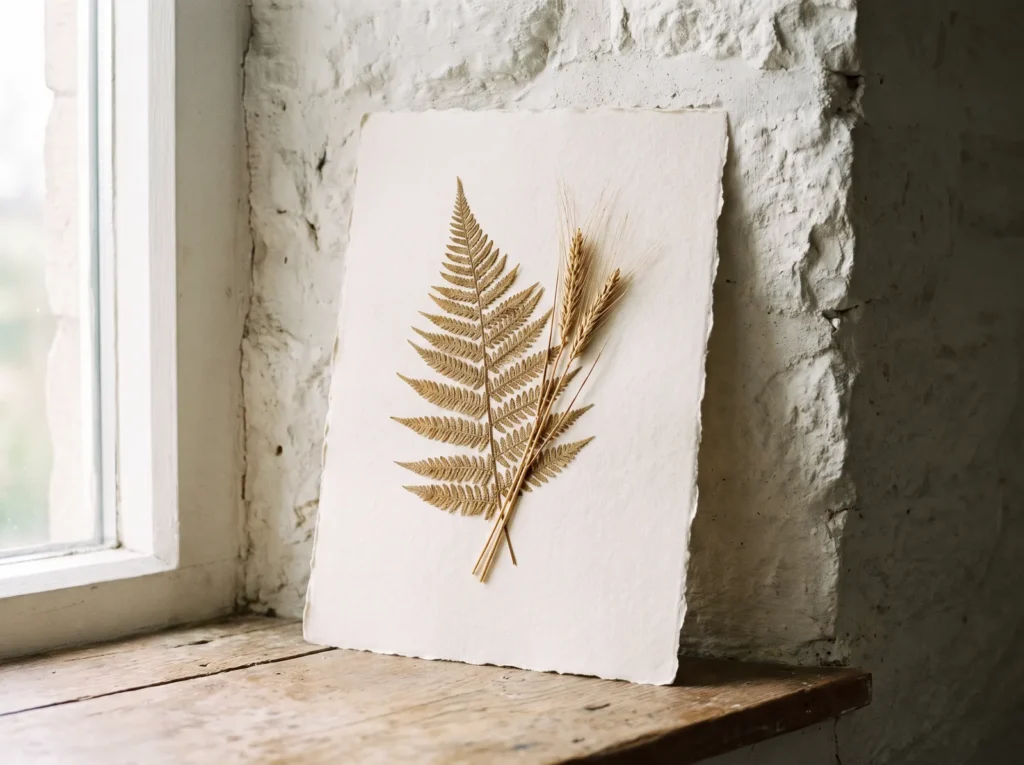
Pressed plants suit this style perfectly. Instead of bright blooms, choose fading ferns, dried eucalyptus or wheat, and mount them on thick handmade cotton paper with deckled edges. They celebrate the beauty of things as they age.
16. Leave negative space
You don’t need to cover the whole canvas. The Japanese idea of ma is about the value of empty space, so leave large areas of raw linen showing. The quiet parts of the canvas matter as much as the textured ones.
Lighting, Color and Display
How you light and display your art changes how it looks, so these last ideas are about finishing touches.
17. Light it with warm bulbs
Texture disappears under the wrong light. Cool daylight bulbs tend to wash out subtle ridges, so choose warm 2700K directional lighting instead. A small picture light above the canvas casts deep, moody shadows across the plaster peaks.
18. Mix ashes into paint
If you want to paint shapes over your plaster, choose muted earthy tones instead of bright colors. A tiny pinch of fireplace ash stirred into warm beige acrylic gives a soft, complex charcoal you can’t buy in a tube.

19. Hang art off-center
Perfect symmetry can feel stiff. Try hanging your textured piece slightly off-center above a credenza, and balance it with a tall, irregular ceramic vase on the other side.
20. Use heavy body acrylics
For color blocking, thin craft paint tends to drip and look watery. Heavy-body acrylics hold their shape much better, so you can spread them with a palette knife over the dried plaster for a thick, buttery contrast.
21. Lean it instead of hanging it
Some of the best organic modern wall decor ideas don’t need a hammer at all. Rest a large plaster canvas on the floor and lean it casually against the wall. It feels relaxed and grounded, and you can move it whenever you like.

Common Questions
What are the best colors for wabi sabi decor?
Stick to muted, earthy colors from nature: warm whites, soft taupes, dusty sage, terracotta and deep charcoal. Bright, saturated colors tend to fight the calm, restful feel you’re aiming for.
How do I keep my plaster art from cracking and falling off?
Use joint compound rather than spackle, make sure your canvas is tight, and mist it lightly with water before you start. Keep each layer under half an inch thick, and seal the finished piece with a matte spray once it’s dry.
What is the difference between Japandi and Wabi Sabi?
Japandi is an interior style that blends Japanese minimalism with Scandinavian simplicity, usually with clean lines and smooth surfaces. Wabi sabi is a broader philosophy that embraces rough textures, asymmetry and the natural aging of materials.
There’s no need to wait for a gallery sale. Pick up some joint compound at the hardware store and get your hands dirty. The beauty of this project is that it’s very hard to get wrong, and every uneven scrape becomes part of your home’s story.

