
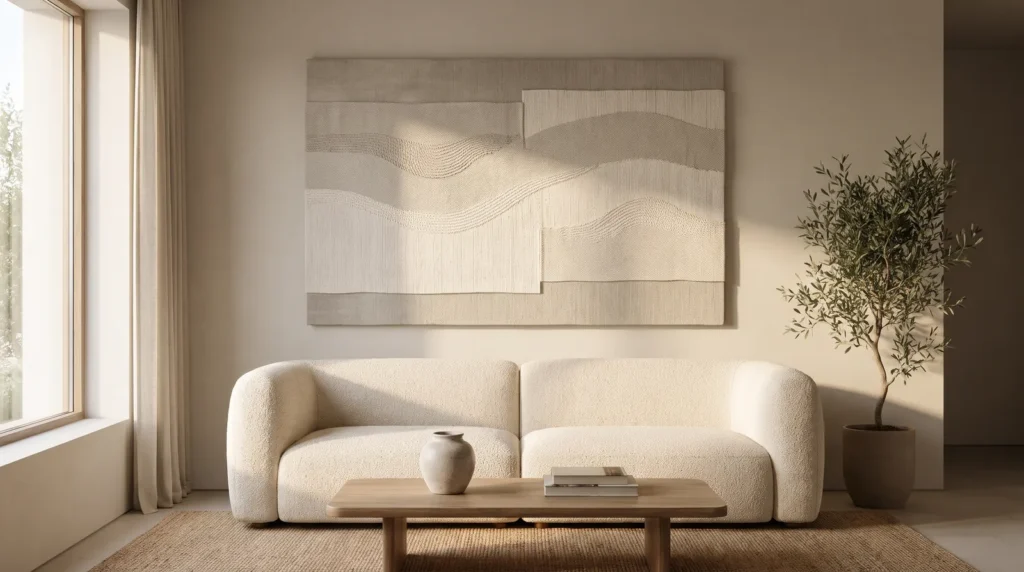
Soft modern neutral wall art is about calm rather than blandness: warm whites, greige and sand tones, with enough texture that light has something to play across. A single textured piece above a sofa or bed can make a room feel quiet and finished in a way a flat print rarely does.
The challenge is keeping neutral art from looking basic. These 23 ideas cover texture, tone, framing, placement and hanging height, so your neutral walls feel considered and warm rather than beige by default.
Key Takeaways
- Choose one large piece over a busy gallery wall. Fifteen small, mismatched frames make a wall feel cluttered, while one generous piece gives the eye a single place to rest.
- Texture does most of the work. Flat prints can look lifeless on a neutral wall. Impasto, raw linen or plaster gives the light something to catch.
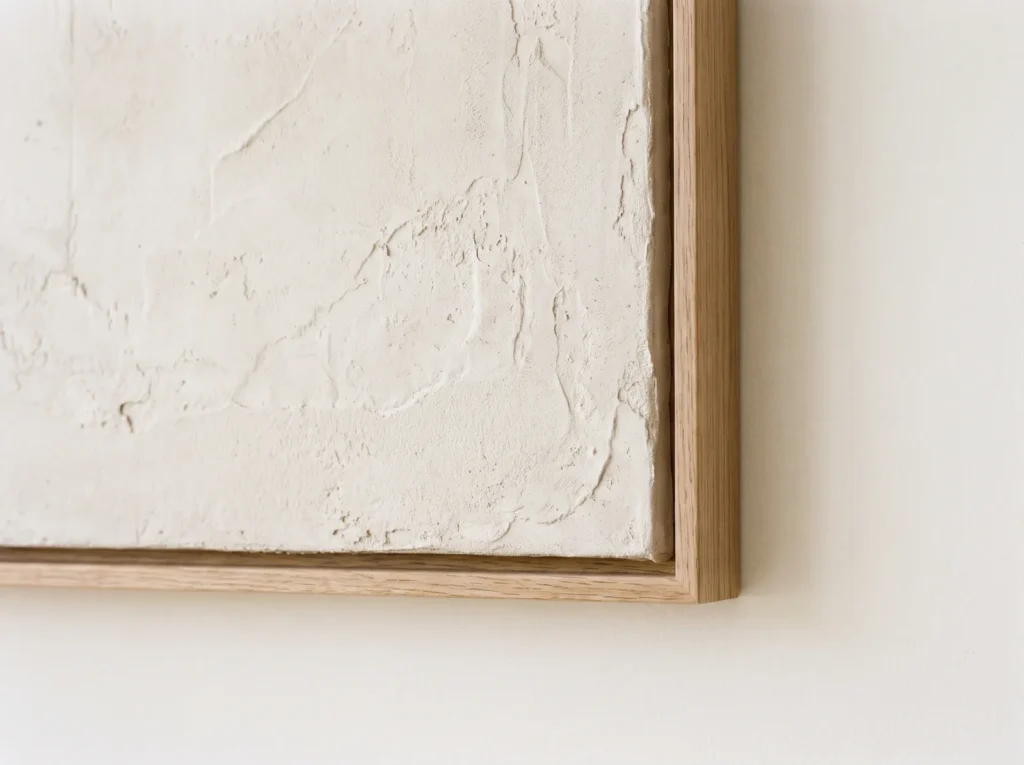
- Use a float frame. Glass hides the texture, so leave the edges visible in a simple white oak float frame instead.
- Don’t be afraid to hang off-center. A piece placed slightly to one side, balanced by a plant or lamp, often looks more relaxed than one centered with a ruler.
Ideas by Room
Before you choose a piece, think about how each room is used and how you want it to feel. These ideas start with the rooms where neutral art makes the biggest difference.
1. A Calm Piece for the Bedroom
Your bedroom isn’t a gallery; it’s where you go to unwind, and the art should help with that. Minimalist abstract pieces with soft, horizontal planes work beautifully here, because long horizontal lines echo the horizon and tend to feel calm and restful.
2. A Bold Piece for the Entryway
The entryway is the first thing guests see, so it’s a good place for something with a little presence. A heavy, arched plaster piece above a raw wood console table sets the tone for the rest of your home the moment someone walks in.
3. One Large Piece for the Living Room
Small pieces above a large sectional tend to look lost. Choose a textured canvas that spans at least two-thirds of the sofa’s width so it anchors the seating area properly.
4. Soft Art for the Dining Room
A dining room should feel warm, and cool grays can make it feel a little sterile. Warm sepia tones, deep umber washes or a woven textile hanging work well here, and fabric pieces also help soften the sound of clinking glasses.
Neutral Wall Art Ideas to Try
Scroll through any home decor feed and you’ll see the same beige rooms again and again. If you want your space to feel different, you need to push the materials a little further. These are the neutral wall art ideas that make a calm room feel interesting instead of flat.
5. Deep, Heavy Plaster Texture
This DIY method is hugely popular, but it often goes wrong because people reach for cheap, fluffy spackle. Use USG Sheetrock All-Purpose joint compound instead, troweled firmly over a rigid MDF board, since canvas sags under the weight of wet plaster and wood doesn’t. For the step-by-step process on preparing and using rigid wood boards, see my guide to 25 Lessons for Plaster Art on Plywood, From Prep to Hanging.
6. Faded Dried Botanicals
Instead of bright, cheerful flowers, try botanicals that have faded naturally. Dried eucalyptus, pressed ferns turning soft brown and muted beige botanical prints have a quiet, vintage feel that suits a neutral room.

7. Simple, Confident Line Art
A single charcoal stroke on a large sheet of cotton rag paper can be surprisingly striking. It’s quick to make, but it takes practice to get one line that feels relaxed and sure, so try it on scrap paper first.
8. Raw Linen Canvas
Stretch unbleached, heavyweight linen over a wooden frame and leave it unpainted. The natural weave, small slubs and soft oatmeal color are enough to make it a piece of art on their own.
9. The Greige Spectrum
Pure white can feel clinical and pure brown can feel heavy, but greige sits comfortably in between, like the light on a cloudy afternoon. It handles artificial light beautifully and can make even a small rental feel more polished.
10. Sculptural Wood Pieces
Art doesn’t have to be flat. A carved ash panel with gentle, rolling waves creates a lovely moving shadow as the sun travels across the room.
11. Soft Watercolor Washes
Mix raw pigment with plenty of water, flood the paper and let it pool and dry on its own. The mix of hard edges and soft gradients gives you a moody, neutral piece with real depth.
12. Torn Paper Edges
Instead of cutting heavy watercolor paper with a trimmer, tear it by hand along a ruler. The soft, deckled edge looks handmade and a little more special, especially in a float frame.
13. Woven Wall Hangings
If macrame feels overdone, look for chunky woven wool tapestries in undyed tones. They add warmth and texture, and like other fabric pieces they help soften echoes in rooms with hard floors.
14. Sepia Photography
High-contrast black and white photos can feel a little harsh in a calm room. Prints with a warm sepia tone give the same graphic look with a softer, more nostalgic feel.
15. The Single Oversized Canvas
A very large raw canvas, around 60 by 72 inches, leaned directly on the floor makes a relaxed statement. It works especially well in rooms with high ceilings or a long, empty wall.
Arranging Your Wall
Even good neutral art can look awkward if it’s hung in the wrong place. These layout ideas help each piece sit comfortably on the wall.
16. Float It in an Oak Frame
A float frame leaves a small gap, about a quarter inch, between the canvas and the wood, so the artwork looks like it’s hovering. It’s an easy way to make an inexpensive DIY plaster piece look gallery-ready.
17. Skip the Black Frames
Black frames create a hard outline that can feel heavy in a soft, modern room. Ash, white oak or raw brass blend in more gently.
18. Hang a Matching Pair
Paint one large piece and cut it in half, or make two panels that continue the same design. Frame them separately and hang them about two inches apart; the small gap between them draws the eye and makes the pair feel considered.
19. Asymmetrical Balance
You don’t have to center everything over the sofa. Try placing a large canvas toward the left and balancing it with a tall olive tree or floor lamp on the right.
20. Leave Plenty of Blank Wall
Empty wall space isn’t something you need to fill. It gives each piece room to stand out, and a wall covered from edge to edge can feel busy even when every piece is neutral.
Hanging and Display
Hanging height matters more than most people expect. A beautiful neutral canvas can look slightly off if it sits even a few inches too high.
21. Hang It Lower Than You Think
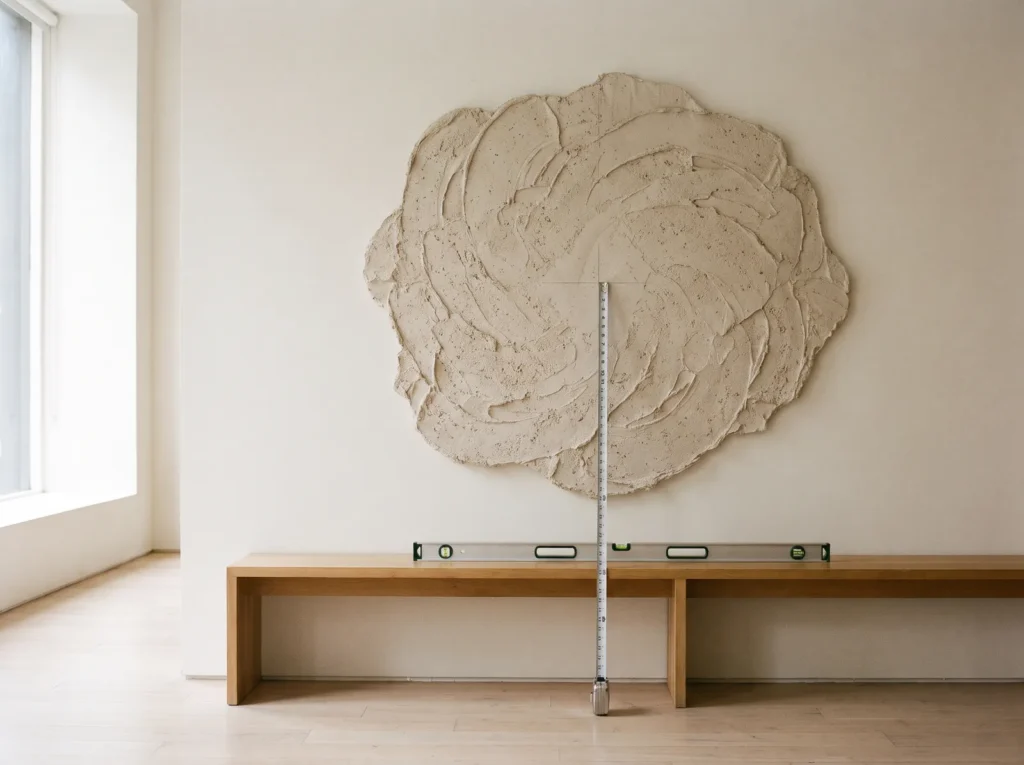
The usual advice is to hang art at eye level, but eye level varies from person to person. A more reliable rule is to place the center of the artwork about 57 inches from the floor, which is the height many galleries use. It keeps your walls consistent from room to room.
22. Use the Right Wall Anchors
Heavy plaster art can pull ordinary drywall screws out of the wall. Use heavy-duty toggle bolts or a continuous aluminum French cleat to spread the weight.
23. Size It to Your Furniture
Avoid hanging art that’s wider than the furniture beneath it, which can make the wall look top-heavy. A good guide is to keep the art between 50 and 75 percent of the width of the sofa or console below.

Neutral art works best when it has texture, room to breathe and good light. Start with one piece for the wall you look at most, whether you make it yourself or buy something you love, and build from there.
Frequently Asked Questions
Why does my DIY textured art keep cracking?
Usually because the joint compound went on too thick in one pass. As the water evaporates, the heavy layer shrinks and cracks. Build the texture in thin layers and let each one dry completely before adding the next. For deeper ridges, mixing a little fine sand into the compound helps it hold its shape.
How do I clean a raw, unvarnished canvas?
Keep water away from it, because moisture turns the dust into a stain that soaks into the fibers. Sweep the surface gently with a clean, dry, soft-bristled brush. For heavier dust, an artist’s dry-cleaning sponge works well.
Is beige art just a trend that will look dated?
Colors go in and out of fashion, but natural materials age well. A cheap beige poster can look dated in a few years, while a piece of real linen on an ash frame will still look good decades from now. Choosing honest materials is what keeps neutral decor timeless.

